Something Borrowed, Something Gripped: The Wedding Guest Wig Playbook
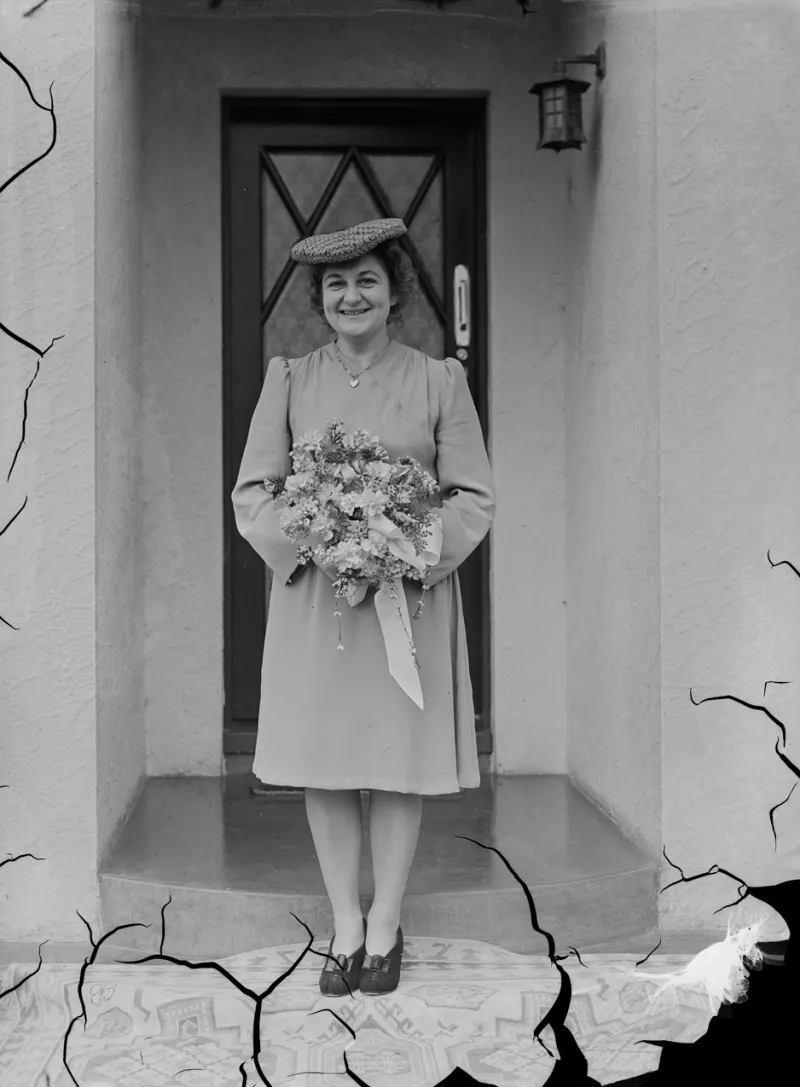
Photo: Collins, Tudor Washington, 1898-1970, photographer, CC BY 4.0, via Wikimedia Commons
Weddings are long. Not in a bad way — in a twelve-hours-in-heels, three-course-meal, second-wind-at-eleven kind of way. And your hair has to survive all of it. For wig wearers, that's not a reason to panic. It's a reason to plan.
This isn't about looking like you've stepped out of a bridal magazine. It's about walking into the ceremony feeling settled, getting through the group photos without a nervous hand on your head, and still looking like yourself when the ceilidh band strikes up. Here's the whole day, start to finish.
Start with the dress code, not the wig
It's tempting to pick the hair first and build the outfit around it. Do it the other way round. A formal country house wedding and a relaxed barn do are two very different briefs, and your wig should read the room.
For black tie or a smart hotel do, think polished. A sleek bob, a smooth shoulder-length style or a low chignon effect sits beautifully with a dressy outfit and won't compete with jewellery. For a garden party or a tipi in a field, you can loosen up: soft waves, a bit of texture, maybe a fringe. If the invitation says 'festival formal' (and yes, that does happen now), a tousled mid-length wig with a natural hairline is your friend.
One practical rule: the more structured your outfit, the more structured your hair can be. Floaty dresses and stiff hair can look a bit mismatched, and vice versa.
Match the wig to the venue, not just the photos
A marquee in July is basically a greenhouse. A stone church is basically a fridge. A barn with the doors open is basically a wind tunnel. Your wig needs to handle all three.
For warm venues, choose a lighter cap and a style that doesn't sit flat against your neck. Lace-front or monofilament caps breathe better, and a shorter or pinned-up look keeps you cool through the vows. For cold churches and evening receptions, you've got more freedom — but do check how the style behaves under a wrap or shawl, because you don't want to be fighting with it at the door.
And pack for British weather. A folded compact umbrella is not defeatist, it's sensible. So is a spare hairpin or two in your bag.
The hug test, the dance test and the wind test
Before the day itself, do a proper dress rehearsal at home. Put the wig on, then do three things.
First, the hug test. Hug someone — properly, both arms, the way you'll hug the bride's auntie you haven't met. Does the wig shift? If yes, your cap needs adjusting or your grip needs work.
Second, the dance test. Put on something with a beat and move like you mean it. This is where a poorly secured wig announces itself. A velvet or silicone grip band under the cap makes a huge difference, and a few well-placed pins at the nape will keep everything anchored.
Third, the wind test. Stand outside on a breezy day, or point a hairdryer at yourself on cool. If the hairline lifts, you need a stronger hold along the front — a lace adhesive or a good grip spray will do it.
Do this a week before, not the morning of. You want time to fix problems, not discover them in the car park.
Fascinators, hats and the headwear question
Some weddings call for a hat or fascinator, especially if it's a church do or a traditional British affair. The good news is that a wig gives you a brilliant base for headwear — better than fine hair, honestly, because there's something solid to pin into.
Go for a fascinator with a comb or a headband rather than one that relies on a tight elastic. Place it slightly to one side, angled with the direction of your parting, and pin through the comb into the wig cap (not your scalp). A small piece of felt or a bit of grip material under the comb stops it sliding.
If you're wearing a wide-brimmed hat, keep the wig simple underneath. A sleek low style or a smooth bob works best — anything with lots of volume will fight the hat and lose. And take the hat off gently at the reception; don't yank, or you'll take the wig with it.
Daylight photographs are your friend — if you prep
Wedding photos happen in bright, unforgiving light, often outdoors, often at an angle you'd never choose. This is where a natural hairline earns its keep.
Choose a lace-front or a style with a realistic parting if photos matter to you (and at a wedding, they will). The night before, check your hairline in daylight — not bathroom light — and make sure any lace is trimmed and blended. A tiny bit of foundation or powder along the parting softens the contrast between scalp and hair.
On the day, ask a friend to do a quick check before the group shots: nape, parting, front edge. Thirty seconds of fuss saves a lot of squinting at the album later.
Your touch-up kit (small enough for a clutch)
You don't need much, but you do need the right things.
- Two or three hairpins that match your wig colour
- A tiny travel hairspray or a grip spray
- Blotting papers (for shine at the hairline)
- A small comb or mini brush
- A couple of alcohol-free wipes for any adhesive mishaps
- A spare grip band, just in case
That's it. It fits in a small pouch, and it means you can duck into the loo after the meal, reset, and carry on.
The long-day etiquette bit
Here's the thing nobody tells you: nobody is watching your hair as closely as you are. Guests are busy. They're watching the couple, finding the bar, and debating whether it's acceptable to have a third slice of cake. If you need to adjust your wig, do it calmly and briefly — a mirror in the loos, a quick reset, back out. No drama, no announcements.
And if someone does ask about your hair? A light 'thanks, I'm loving it today' is a complete answer. You don't owe anyone a full explanation at a wedding. Save that for another day.
From vows to the last dance
A wedding is a marathon, not a sprint, and your wig should be set up for the long haul. Pick a style that suits the venue, secure it properly, prep for the weather and keep a small kit on hand. Then forget about it. Eat the canapés, cry a bit at the speeches, learn the ceilidh steps badly, and get home with your hair — and your confidence — still intact.
That's the whole manual, really. The rest is just cake.