Your Shower Is Sabotaging Your Wig: A Hard-Water Survival Guide for UK Homes

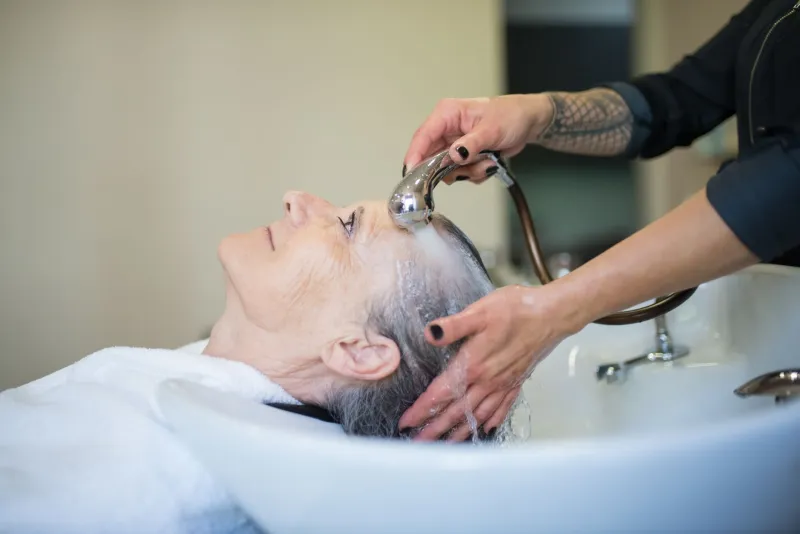
Photo: woman washing synthetic wig in bathroom basin UK hard water care, via sti.mfstat.net
If you’ve ever rinsed a wig in a London bathroom and watched it dry with a faint chalky halo, you’re not imagining it. Much of the UK sits on chalk or limestone, which means the water in plenty of homes is packed with calcium and magnesium. That’s brilliant for kettles that need descaling and less brilliant for delicate fibres.
Most wig care advice is written as if we all have soft water. We don’t. So as we head into the 2026 party season, here’s a genuinely local guide to keeping synthetic and human-hair wigs looking glossy rather than grit-coated.
First, the telltale signs of mineral build-up
Hard water doesn’t usually ruin a wig overnight. It leaves a film. Over time, that film changes how the hair feels, moves and reflects light.
Look out for:
- Dullness that returns suspiciously quickly after washing.
- A stiff, slightly crunchy feeling at the ends, especially on synthetic fibres.
- More tangling than usual, or fibres that cling together instead of falling back into place.
- Human-hair wigs that feel coated even after shampoo, or that won’t hold a style as well as they used to.
- A faint greyish or chalky cast on dark shades in certain bathroom lighting.
- Shampoo that refuses to lather properly, which is often more about the water than the product.
If that sounds familiar, your wig isn’t necessarily tired. It may just be wearing a very British mineral overcoat.
What hard water actually does to wig fibres
Synthetic wigs can’t absorb moisture in the way human hair does, so minerals sit on the surface. They can make the fibre feel rougher, reduce shine and encourage friction. Heat styling can then bake that residue in, which is why a wig that looked fine in October can feel oddly straw-like by December.
Human-hair wigs are more absorbent, so hard water can affect the cuticle and leave hair feeling rough or weighed down. It can also interfere with conditioning, because you’re trying to add softness while minerals are busy leaving a film on top.
The good news is that most build-up is manageable. The less good news is that you need a slightly different routine depending on whether you’re caring for synthetic or human hair.
The reset routine that actually works
For human-hair wigs, a chelating shampoo is the useful specialist. Unlike a standard shampoo, it is designed to bind to minerals and lift them away. You don’t need it every wash. In very hard-water areas, once a month or every four to six washes is a sensible starting point. Follow with a moisturising mask, because chelating can be thorough and you want to put softness back afterwards.
For synthetic wigs, don’t borrow human-hair chelating products and hope for the best. Use a gentle wash with a small amount of mild shampoo, keep the water cool, and make the final rinse count. A final dunk in filtered or distilled water can make a real difference in hard-water homes. It sounds fussy, but a bottle of distilled water is cheaper than replacing a wig early.
A very dilute vinegar rinse can help shift surface film on some synthetic fibres, but keep it brief, rinse thoroughly and avoid it if your cap or adhesive is delicate. If in doubt, filtered water is the safer everyday hero.
Clarifying vs chelating: the short version
Clarifying removes product, oil and general grime. Chelating targets minerals. If your wig feels coated but you haven’t been heavy-handed with styling products, minerals are a likely culprit. If it feels sticky or weighed down, product build-up may be the issue.
Human hair can usually handle a proper chelating shampoo now and then. Synthetic fibres need a gentler approach: less scrubbing, cooler water, a soft-water final rinse and patience. Never brush a wet synthetic wig aggressively. You’ll create frizz and then blame the water, and the water has enough to answer for already.
A region-by-region wash schedule cheat sheet
Water hardness varies street by street, so check your supplier’s postcode map if you want the precise picture. As a rough UK guide:
London and the South East
Often very hard. Synthetic wigs may benefit from a final filtered rinse after every wash, plus a gentle clarifying wash every six to eight wears. Human-hair wigs can often take a monthly chelating wash. Keep heat styling moderate and use a heat protectant.
East Anglia
Frequently hard. Similar to London, but watch for crunchy ends on synthetic fibres during cold, dry weather. A leave-in wig conditioner spray can help with friction, but don’t overdo it near the roots.
The Midlands and parts of the South West
Mixed, with hard pockets. Start with a clarifying wash every eight to ten wears for synthetic wigs and adjust if you notice dullness returning quickly. Human hair may need chelating every six to eight weeks.
North West and North East England
Often softer, though not universally so. A standard gentle wash routine may be enough. Use filtered water as a final rinse if your wig still dries dull.
Scotland and Wales
Many areas have soft water, so mineral build-up is less of a daily battle. Still watch for product residue and central-heating dryness. Soft water doesn’t mean you can skip conditioning entirely.
Small habits that make a big difference
- Use cool or lukewarm water, not hot. Hot water opens the human-hair cuticle and can make roughness worse.
- Blot with a microfibre towel instead of wringing. Wringing distorts fibres and cap shape.
- Dry on a wig stand in a well-ventilated room, away from radiators and direct heat.
- Keep styling products light. The more you layer, the harder it is to tell product build-up from mineral film.
- Store your wig away from steamy bathrooms. A bedroom drawer or breathable box is kinder than the back of the bathroom door.
- If you use a shower filter, change it as instructed. A tired filter is just a decorative cylinder.
When to stop rescuing and start replacing
If a synthetic wig stays stiff and dull after a gentle wash and a filtered rinse, the fibre may be past its best. Human-hair wigs are more forgiving, but if the ends feel rough even after chelating and conditioning, a trim may be more sensible than another deep-clean.
Hard water is not a personal failing, and it is not a reason to settle for a wig that feels second-rate. It is just a local condition to manage. Adjust your wash schedule, keep a bottle of filtered water handy and judge your wig by how it looks and feels, not by how it behaves in the first thirty seconds after a tap rinse.
Your next look starts with confidence — and sometimes that means outsmarting your own shower.